Attribution Creative Commons Noncommercial No Derivatives Share Alike Zero

Kurtlarvadisi2002completevcdripfstrdubx Exclusive [2021] (VALIDATED × CHECKLIST)

Ayrıca dizinin devamı niteliğindeki "Kurtlar Vadisi Pusu" ve "Kurtlar Vadisi Terör" gibi yapımlar da izleyiciyle buluşmuştur.

Here’s a breakdown of what that title usually means in file-sharing/piracy contexts:

Modern streaming and HD uploads of Kurtlar Vadisi often suffer from altered or replaced background music due to updated copyright laws. The original VCD rips preserve the haunting, iconic musical scores composed by Gökhan Kırdar exactly as they aired.

If you are looking to dig deeper into vintage television archiving, let me know: kurtlarvadisi2002completevcdripfstrdubx exclusive

Indicates that the collection includes all 97 episodes of the original series.

These files are ripped directly from VCDs, ensuring the original aspect ratio ( ) and picture quality.

Dizi, toplamda ve 4 sezon boyunca ekranlarda kalmıştır. İlk üç sezon Show TV'de yayınlanmış, dördüncü ve son sezon ise Kanal D'ye transfer olmuştur. Aşağıdaki tabloda dizinin sezonlara göre bölüm ve yayın bilgilerini bulabilirsiniz: If you are looking to dig deeper into

Kurtlar Vadisi (Valley of the Wolves), which debuted in 2002, is not merely a television series in Turkey; it is a cultural phenomenon that redefined action and political drama. For true collectors and fans seeking the most authentic, nostalgic viewing experience, the release is considered the holy grail.

The search for a rare release begins with understanding the epic franchise itself. Kurtlar Vadisi (meaning "Valley of the Wolves") began as a television series created by Osman Sınav and Raci Şaşmaz. The series aired for 97 episodes across four seasons. The show stars Necati Şaşmaz as , a Turkish intelligence agent working undercover to infiltrate the country's most dangerous mafia families. He is joined by key characters like Süleyman Çakır (played by Oktay Kaynarca), Memati Baş (Gürkan Uygun), and his love interest Elif Eylül (Özgü Namal).

Tip: Search for keywords combining "Kurtlar Vadisi", "VCDrip", "FullSet", "1-97", and "OriginalAudio" for the best results. Summary Table: VCDrip vs. Modern Stream VCDrip FSTR Dubx (2002) Modern HD Stream (e.g., YouTube) 4:3 (Original) 16:9 (Cropped/Stretched) Audio Original 2002 Mixed Audio Re-mastered / Changed Visuals Gritty, High-Contrast Clean, Brightened Authenticity Size/Quality Small (Lower resolution) Large (1080p/4K) İlk üç sezon Show TV'de yayınlanmış, dördüncü ve

When a series is as monumental as Kurtlar Vadisi , the way it is consumed matters. Modern streaming platforms often edit, censor, or re-render old shows, reducing the original atmosphere. The "exclusive" VCDRip format is prized for several reasons:

Enjoy the classic episodes!
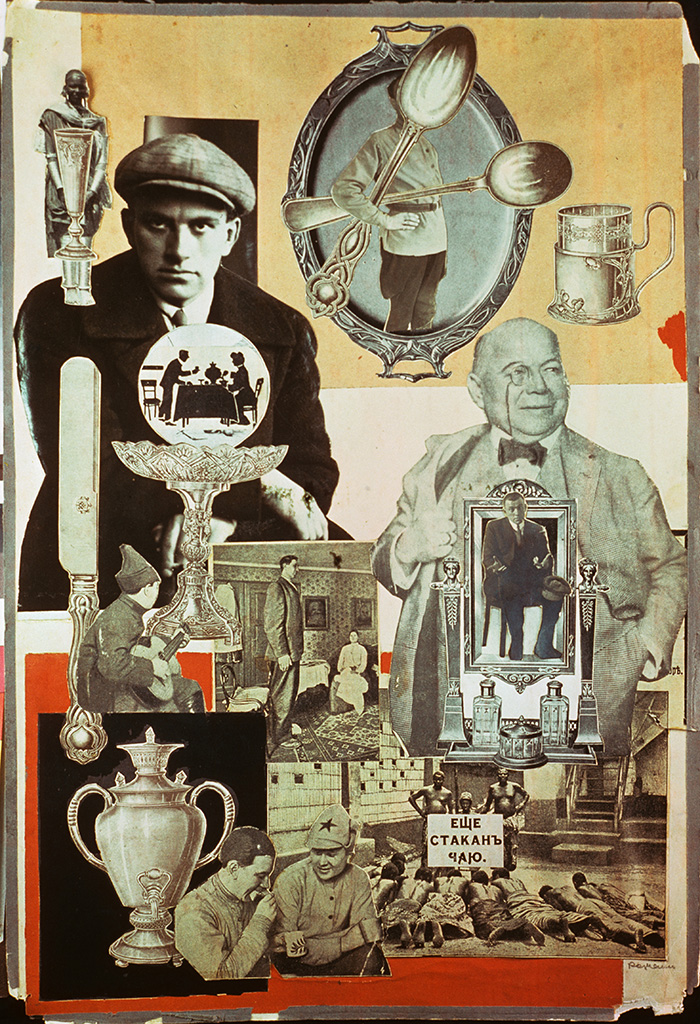
Fig. 1. — Brigade KGK (Viktor Koretsky [1909–98], Vera Gitsevich [1897–1976], and Boris Knoblok [1903–84]). “We had to overcome among the people in charge of trade the unhealthy habit of distributing goods mechanically; we had to put a stop to their indifference to the demand for a greater range of goods and to the requirements of the consumers.” From the 16th to the 17th Congress of the All-Union Communist Party (Bolsheviks), 1934, no. 57, gelatin silver print, 22.7 × 17 cm. Los Angeles, Getty Research Institute, 2014.R.25.
Fig. 2. — Brigade KGK (Viktor Koretsky [1909–98], Vera Gitsevich [1897–1976], and Boris Knoblok [1903–84]). “There is still among a section of Communists a supercilious, disdainful attitude toward trade in general, and toward Soviet trade in particular. These Communists, so-called, look upon Soviet trade as a matter of secondary importance, not worth bothering about.” From the 16th to the 17th Congress of the All-Union Communist Party (Bolsheviks), 1934, no. 56, gelatin silver print, 22.7 × 17 cm. Los Angeles, Getty Research Institute, 2014.R.25.
Collage of photographs showing Vladimir Mayakovsky surrounded by a silver samovar, cutlery, and trays; two soldiers enjoying tea; a giant man in a bourgeois parlor; and nine African men lying prostrate before three others who hold a sign that reads, in Cyrillic letters, “Another cup of tea.”
Fig. 3. — Aleksandr Rodchenko (Russian, 1890–1956). Draft illustration for Vladimir Mayakovsky’s poem “Pro eto,” accompanied by the lines “And the century stands / Unwhipped / the mare of byt won’t budge,” 1923, cut-and-pasted printed papers and gelatin silver photographs, 42.5 × 32.5 cm. Moscow, State Mayakovsky Museum. Art © 2024 Estate of Alexander Rodchenko / UPRAVIS, Moscow / ARS, NY. Photo: Art Resource.
Fig. 4. — Boris Klinch (Russian, 1892–1946). “Krovovaia sobaka,” Noske (“The bloody dog,” Noske), photomontage, 1932. From Proletarskoe foto, no. 11 (1932): 29. Los Angeles, Getty Research Institute, 85-S956.
Fig. 5. — Brigade KGK (Viktor Koretsky [1909–98], Vera Gitsevich [1897–1976], and Boris Knoblok [1903–84]). “We have smashed the enemies of the Party, the opportunists of all shades, the nationalist deviators of all kinds. But remnants of their ideology still live in the minds of individual members of the Party, and not infrequently they find expression.” From the 16th to the 17th Congress of the All-Union Communist Party (Bolsheviks), 1934, no. 62, gelatin silver print, 22.7 × 17 cm. Los Angeles, Getty Research Institute, 2014.R.25.
Fig. 6. — Brigade KGK (Viktor Koretsky [1909–98], Vera Gitsevich [1897–1976], and Boris Knoblok [1903–84]). “There are two other types of executive who retard our work, hinder our work, and hold up our advance. . . . People who have become bigwigs, who consider that Party decisions and Soviet laws are not written for them, but for fools. . . . And . . . honest windbags (laughter), people who are honest and loyal to Soviet power, but who are incapable of leadership, incapable of organizing anything.” From the 16th to the 17th Congress of the All-Union Communist Party (Bolsheviks), 1934, no. 70, gelatin silver print, 22.7 × 17 cm. Los Angeles, Getty Research Institute, 2014.R.25.
Fig. 7. — Artist unknown. “The Social Democrat Grzesinski,” from Proletarskoe foto, no. 3 (1932): 7. Los Angeles, Getty Research Institute, 85-S956.
Fig. 8A. — Pavel Petrov-Bytov (Russian, 1895–1960), director. Screen capture from the film Cain and Artem, 1929. Image courtesy University of California, Berkeley, Berkeley Art Museum and Pacific Film Archive Library.
Fig. 8B. — Pavel Petrov-Bytov (Russian, 1895–1960), director. Screen capture from the film Cain and Artem, 1929. Image courtesy University of California, Berkeley, Berkeley Art Museum and Pacific Film Archive Library.
Fig. 8C. — Pavel Petrov-Bytov (Russian, 1895–1960), director. Screen capture from the film Cain and Artem, 1929. Image courtesy University of California, Berkeley, Berkeley Art Museum and Pacific Film Archive Library.
Fig. 9. — Herbert George Ponting (English, 1870–1935). Camera Caricature, ca. 1927, gelatin silver prints mounted on card, 49.5 × 35.6 cm (grid). London, Victoria and Albert Museum, RPS.3336–2018. Image © Royal Photographic Society Collection / Victoria and Albert Museum, London.
Fig. 10. — Aleksandr Zhitomirsky (Russian, 1907–93). “There are lucky devils and unlucky ones,” cover of Front-Illustrierte, no. 10, April 1943. Prague, Ne Boltai! Collection. Art © Vladimir Zhitomirsky.
of