Nonton Video Bokep Anak Sd Diajarin Ngentot Sama Ibunya Full __link__ 🆕 Must Watch
Tavis Ormandy
$Id: a07cf90837a3c4373b82d6724b97593810766af7 $
Nonton Video Bokep Anak Sd Diajarin Ngentot Sama Ibunya Full __link__ 🆕 Must Watch
I never used Lotus Agenda, but I’m told it was a popular productivity tool for MS-DOS in the late 80s. I’ve been on a retro software rediscovery kick lately, so I’ve decided to give it a whirl and write about my experiences. There is something that appeals to me about using long-abandoned software. Perhaps it’s update fatigue, there’s certainly no need to dread a major update breaking something!
Regardless, I’ve always enjoyed finding new productivity tools to try out, and I’m not afraid of steep learning curves or getting my hands dirty. I’ll usually choose powerful and flexible software over simplicity.
At the moment I mostly use taskwarrior, but I’ve lost count of all the others I’ve tried!
Nonton Video Bokep Anak Sd Diajarin Ngentot Sama Ibunya Full __link__ 🆕 Must Watch
Agenda is a PIM, a Personal Information Manager. That term has fallen out of fashion, I think a quick summary might be “anything that manages those small pieces of information we all deal with”. Things like contacts, todo lists, notes, and so on.
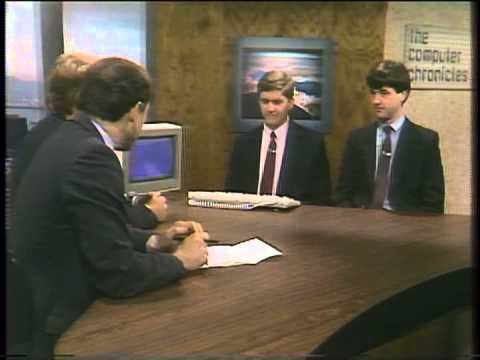
I found a 1989 episode of the TV show Computer Chronicles that discussed how people thought about PIMs at the time.
At the 21-minute mark there’s a demonstration of Lotus Agenda, but it’s not easy to follow, watch the clip and you’ll see what I mean. Still, you do see some interesting features:
Some form of NLP is used to extract dates and names from free-form text.
Categories are a little like what we would call tags today.
You can create custom dashboards called views.
Apparently this was an $800 software package (That’s $395 adjusted for inflation from 1989), yikes! You don’t have to pay that, Lotus made it available for free when development ceased.
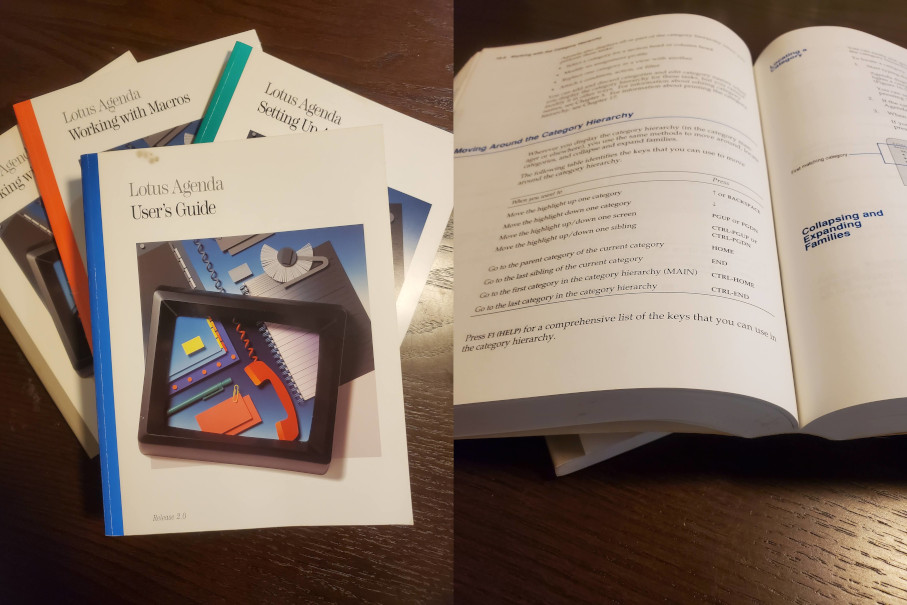
In preparation for trying out Agenda, I found a copy of the original manuals on eBay for a few dollars. Just look at this monster, the user guide alone is over 700 pages, that’s not including the supplementary guides. The supplements I have are Working with Macros, Working with Definition Files, Setting up Agenda, and a few miscellaneous leaflets.
I guess that’s my bedtime reading taken care of for a while. I actually received the macro reference still in the original shrink wrap, it almost seems a shame to open it!
: Facebook remains a massive force with a 91.69% market share , followed by YouTube as a primary hub for entertainment and viral trends.
The traditional era of Indonesian entertainment was defined by a few major private television networks like RCTI, SCTV, and Indosiar. For nearly three decades, sinetron was the undisputed king of popular video. These shows, often featuring exaggerated drama, rivalries, and religious motifs, provided a daily ritual for Indonesian families. However, by the mid-2010s, fatigue set in. The repetitive plots and the rise of cheaper internet data packages led viewers, especially the younger millennial and Gen Z demographics, to seek alternatives. They found them on platforms like YouTube, which quickly transformed from a video-sharing site into the new mainstream of Indonesian entertainment.
Mainstream TV celebrities have successfully transitioned to YouTube, creating massive media empires. Channels hosted by stars like Raffi Ahmad (Rans Entertainment) and Baim Paula draw millions of views daily. They share raw, day-to-day family life, pranks, and charity work. Localized Comedy and "Receh" Humor
If you are interested in a different topic related to digital safety, media literacy, or legal online content, I would be glad to help with a different request.
The Indonesian entertainment industry has experienced rapid growth in recent years, driven by the country's large and youthful population, increasing internet penetration, and a thriving digital economy. The industry encompasses various sectors, including music, film, television, and online content.
Are you a fan of Indonesian entertainment? Which genre do you prefer: horror streaming or comedy vlogs? Let us know in the comments below.
The Digital Boom: A Deep Dive into Indonesian Entertainment and Popular Videos
The types of video content that achieve viral status in Indonesia offer a fascinating look into the collective psyche of the nation. Several distinct genres consistently dominate the trending charts: 1. Sinetron Clips and Dramatic Short-Form Fiction
From Bali cliffside temples to Java's volcanoes, 4K travel vlogs showcasing the country's biodiversity are top-tier entertainment. 🚀 Why Indonesia's Digital Scene Matters
Indonesian audiences possess a deep affinity for parasocial relationships with celebrities and mega-influencers (such as Raffi Ahmad's Rans Entertainment or Baim Wong). Content format revolves around hyper-detailed daily vlogs, extravagant family updates, and elaborate prank videos. While some content falls under settingan (openly or subtly staged scenarios), the dramatic tension keeps audiences hooked. Key Platforms Shaping the Ecosystem
The rise of popular videos has birthed a lucrative creator economy. Brands now prioritize influencer marketing over traditional billboard or television advertisements. Top Indonesian creators operate like full-scale media corporations, employing production crews, scriptwriters, and talent managers. This professionalization has drastically raised the production quality of Indonesian online entertainment, making it competitive on a global scale. 5. Looking Ahead: The Future of Indonesian Online Videos
Nonton Video Bokep Anak Sd Diajarin Ngentot Sama Ibunya Full __link__ 🆕 Must Watch
You probably need to use other applications or services, and sync your data with your phone. Writing and reading files from outside DOSEMU is no problem, so if you just want to sync files this is no problem.
As it’s a terminal application you can also just SSH in and run it.
You probably also want to have your appointments sync with your calendar or something.
Export
There are two ways to export data from Agenda. If you have a commandline tool that you can pass arguments to, then you can write a macro that will invoke it.
Otherwise, you can export your data to a file.
Files
Agenda can export items to a format called STF, Structured Text File. The specification for that format is (mostly) documented in the manual, but it didn’t catch on.
I wrote a quick parser that can convert it to JSON, so now you can use modern tools like jq to manipulate and transform the data however you wish.
And so on, there are more examples in the README. If you can exchange data with other apps, you can now use stfjson to generate the correct format.
You can automate exports, Agenda has “Special Actions” in the category options. Alternatively, if it’s just a one off or for a macro, you can use the Transfer > Export command.
Commands
In DOSEMU, the UNIX command will invoke a shell command on the host.
C:\>unix uname
Linux
If there is a commandline tool that will import data, e.g. a TaskWarrior user might use task add drop off laundry at dry cleaners, then you can create a macro in Agenda that simply launches that command.
You can use something like {F10}ULUNIX task {TYPE;%TASKTEXT}.
Import
Surprisingly, Agenda supports importing arbitrary text data. One of the manuals that came with agenda was Working with Definition Files, which explains how to write a configuration file that allow Agenda to parse anything.
It even has a Regular Expression tutorial, pretty impressive for a 1980s consumer product.
Nonton Video Bokep Anak Sd Diajarin Ngentot Sama Ibunya Full __link__ 🆕 Must Watch
I quite like Agenda. It does many things well, but it’s absolutely true you could replicate most of it’s functionality with modern tools. However, I do enjoy using it, and I’m a big enough nerd that I quite like the challenge of using retro software.
I think the closest modern equivalent to Agenda would be taskwiki. It’s not a perfect match, but if you liked some of what you saw here but are not interested in retro software, try it out!
I’m still using Agenda after two weeks, and about 40% of the way through the manual 😂
Nonton Video Bokep Anak Sd Diajarin Ngentot Sama Ibunya Full __link__ 🆕 Must Watch
Nonton Video Bokep Anak Sd Diajarin Ngentot Sama Ibunya Full __link__ 🆕 Must Watch
: Facebook remains a massive force with a 91.69% market share , followed by YouTube as a primary hub for entertainment and viral trends.
The traditional era of Indonesian entertainment was defined by a few major private television networks like RCTI, SCTV, and Indosiar. For nearly three decades, sinetron was the undisputed king of popular video. These shows, often featuring exaggerated drama, rivalries, and religious motifs, provided a daily ritual for Indonesian families. However, by the mid-2010s, fatigue set in. The repetitive plots and the rise of cheaper internet data packages led viewers, especially the younger millennial and Gen Z demographics, to seek alternatives. They found them on platforms like YouTube, which quickly transformed from a video-sharing site into the new mainstream of Indonesian entertainment.
Mainstream TV celebrities have successfully transitioned to YouTube, creating massive media empires. Channels hosted by stars like Raffi Ahmad (Rans Entertainment) and Baim Paula draw millions of views daily. They share raw, day-to-day family life, pranks, and charity work. Localized Comedy and "Receh" Humor nonton video bokep anak sd diajarin ngentot sama ibunya full
If you are interested in a different topic related to digital safety, media literacy, or legal online content, I would be glad to help with a different request.
The Indonesian entertainment industry has experienced rapid growth in recent years, driven by the country's large and youthful population, increasing internet penetration, and a thriving digital economy. The industry encompasses various sectors, including music, film, television, and online content. : Facebook remains a massive force with a 91
Are you a fan of Indonesian entertainment? Which genre do you prefer: horror streaming or comedy vlogs? Let us know in the comments below.
The types of video content that achieve viral status in Indonesia offer a fascinating look into the collective psyche of the nation. Several distinct genres consistently dominate the trending charts: 1. Sinetron Clips and Dramatic Short-Form Fiction
From Bali cliffside temples to Java's volcanoes, 4K travel vlogs showcasing the country's biodiversity are top-tier entertainment. 🚀 Why Indonesia's Digital Scene Matters
Indonesian audiences possess a deep affinity for parasocial relationships with celebrities and mega-influencers (such as Raffi Ahmad's Rans Entertainment or Baim Wong). Content format revolves around hyper-detailed daily vlogs, extravagant family updates, and elaborate prank videos. While some content falls under settingan (openly or subtly staged scenarios), the dramatic tension keeps audiences hooked. Key Platforms Shaping the Ecosystem
The rise of popular videos has birthed a lucrative creator economy. Brands now prioritize influencer marketing over traditional billboard or television advertisements. Top Indonesian creators operate like full-scale media corporations, employing production crews, scriptwriters, and talent managers. This professionalization has drastically raised the production quality of Indonesian online entertainment, making it competitive on a global scale. 5. Looking Ahead: The Future of Indonesian Online Videos