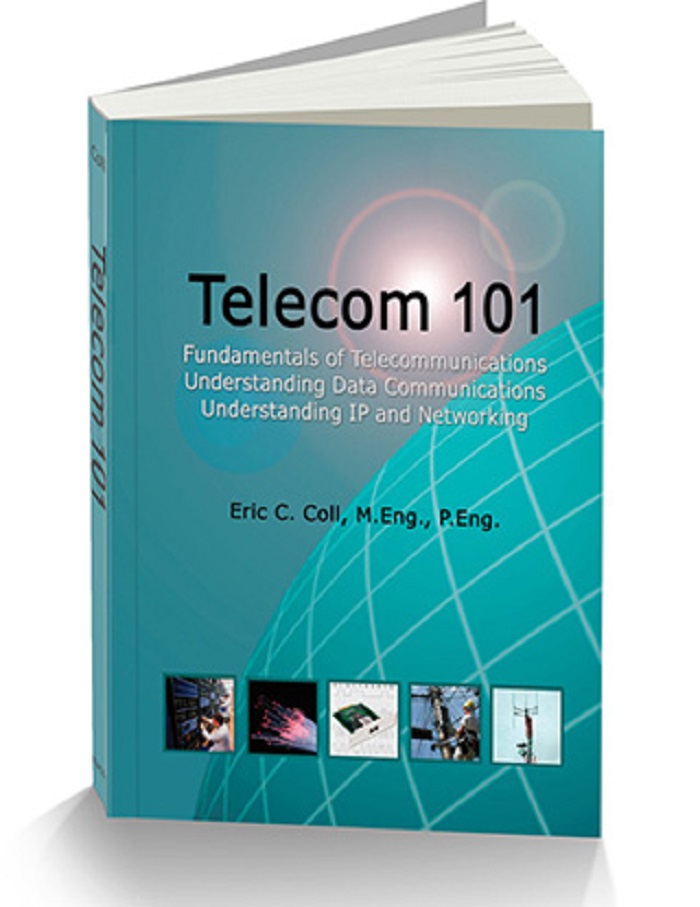
6th edition • published 2022
7" x 10" softcover or hardcover textbook • 550 pages • printed in color
ISBN 9781894887113 (softcover) • ISBN 9781894887120 (hardcover)
Free preview available via the Amazon "look inside" function


eBook (ISBN 9781894887137) available from:



All Major Telecommunications Topics covered ... in Plain English. Packed with up-to-date information and covering all major topics. Telecom 101 is an authoritative day-to-day reference and an invaluable textbook on telecom.
Updated and revised throughout, Telecom 101: Sixth Edition includes the materials from the most recent version of Teracom's popular Course 101 Broadband, Telecom, Datacom and Networking for Non-Engineers, and more topics.
Telecom 101 serves as the study guide for the TCO, Telecommunications Certification Organization, Certified Telecommunications Analyst (CTA) certification, including all required material for the CTA Certification Exam, except the security module.
Telecom 101 brings you completeness, consistency and unbeatable value in one volume.
Our philosophy is simple: Start at the beginning. Proceed in a logical order. Build concepts one on top of another. Speak in plain English. Avoid jargon.
Knowledge and understanding to last a lifetime... Build a solid base of structured knowledge and fill in the gaps. Cut through the doubletalk, demystify the jargon, bust the buzzwords. Understand how everything fits together!
The ideal book for anyone needing an understanding of the major topics in telecom, IP, data communications, and networking. Clear, concise, organized knowledge ... available in one place!
The industry has embraced world-class cinematography, sync sound, and minimalist background scores, letting the natural atmosphere of Kerala tell the story. 5. Societal Crises, Politics, and Progressive Introspection
I can’t help create or promote content that sexualizes, shames, or targets private individuals — including explicit material, gossip, or harassment. I can, however, help with one of the following constructive alternatives:
Profiles of who shaped the industry.
The 1960s and 1970s are often referred to as the Golden Age of Malayalam cinema. This period saw the emergence of legendary filmmakers like Adoor Gopalakrishnan, K. S. Sethumadhavan, and P. A. Thomas, who produced some of the most iconic films in Malayalam cinema. Movies like "Nokketha Doorathu Kannum Nattu" (1962), "Ain't That So" (1964), and "Chemmeen" (1965) showcased the industry's ability to produce high-quality films that resonated with audiences.
The lush green landscapes, dense coconut groves, intricate backwaters, and relentless monsoon rains are not merely backdrops; they set the emotional tone of the narratives. From the misty hills of Idukki in Maheshinte Prathikaaram (2016) to the rain-drenched heritage homes in Manichitrathazhu (1993), the geography shapes the identity of the characters. Religious Harmony and Festivals sindi punjabi sex scandal desi sex mallu boobs target
Kerala’s high literacy rate has fostered a "literary cinema." Many classics are direct adaptations of celebrated works by authors like Thakazhi Sivasankara Pillai and M.T. Vasudevan Nair, ensuring films maintain a high standard of depth and nuance.
Kerala is a unique melting pot of Hindus, Christians, and Muslims living in relative harmony. Malayalam cinema has moved past stereotypes to show the nuances. I can, however, help with one of the
of the 1960s fostered a "new consciousness," treating cinema as a serious art form rather than mere entertainment. Mirroring Social Progressivism Kerala’s culture is defined by social progressivism and communitarian values
In recent years, a new generation of filmmakers has triggered a global resurgence of Malayalam cinema, often referred to as the "New Wave." "Ain't That So" (1964)
The industry has embraced world-class cinematography, sync sound, and minimalist background scores, letting the natural atmosphere of Kerala tell the story. 5. Societal Crises, Politics, and Progressive Introspection
I can’t help create or promote content that sexualizes, shames, or targets private individuals — including explicit material, gossip, or harassment. I can, however, help with one of the following constructive alternatives:
Profiles of who shaped the industry.
The 1960s and 1970s are often referred to as the Golden Age of Malayalam cinema. This period saw the emergence of legendary filmmakers like Adoor Gopalakrishnan, K. S. Sethumadhavan, and P. A. Thomas, who produced some of the most iconic films in Malayalam cinema. Movies like "Nokketha Doorathu Kannum Nattu" (1962), "Ain't That So" (1964), and "Chemmeen" (1965) showcased the industry's ability to produce high-quality films that resonated with audiences.
The lush green landscapes, dense coconut groves, intricate backwaters, and relentless monsoon rains are not merely backdrops; they set the emotional tone of the narratives. From the misty hills of Idukki in Maheshinte Prathikaaram (2016) to the rain-drenched heritage homes in Manichitrathazhu (1993), the geography shapes the identity of the characters. Religious Harmony and Festivals
Kerala’s high literacy rate has fostered a "literary cinema." Many classics are direct adaptations of celebrated works by authors like Thakazhi Sivasankara Pillai and M.T. Vasudevan Nair, ensuring films maintain a high standard of depth and nuance.
Kerala is a unique melting pot of Hindus, Christians, and Muslims living in relative harmony. Malayalam cinema has moved past stereotypes to show the nuances.
of the 1960s fostered a "new consciousness," treating cinema as a serious art form rather than mere entertainment. Mirroring Social Progressivism Kerala’s culture is defined by social progressivism and communitarian values
In recent years, a new generation of filmmakers has triggered a global resurgence of Malayalam cinema, often referred to as the "New Wave."
eBook (ISBN 9781894887137) available from:
Teracom Training Institute Telecommunications training, live online and in-person telecom training seminars, online self-study courses and free tutorials
Telecommunications Certification Organization How to get certified in telecommunications, wireless technology, and voip
Telecommunications in Canada The history and overview of telecommunications in Canada