Part of our INSYDIUM Fused Collection, X-Particles is a fully-featured advanced particle and VFX system for Maxon’s Cinema 4D. Its unique rule system of Questions and Actions enables complete control over particle simulations.

Part of our INSYDIUM Fused Collection, X-Particles is a fully-featured advanced particle and VFX system for Maxon’s Cinema 4D. Its unique rule system of Questions and Actions enables complete control over particle simulations.
At its core, "The Fly" is a chilling story of a man's ambition colliding with a devastating accident. The film, directed by Kurt Neumann and written by the legendary James Clavell in his screenwriting debut, is based on a 1957 short story by George Langelaan, first published in Playboy magazine.
It periodically rotates onto movie channels like the Criterion Channel, AMC+, or IndieFlix.
The grainy CinemaScope image bloomed into full, hyper-real 8K. The laboratory set walls fell away, revealing a chrome-and-glass room filled with humming obelisks. A figure stepped into frame. Not Vincent Price. Someone younger, wearing a lab coat embroidered with a logo she didn’t recognize: .
That is the true horror. Not the mutation. Not the death. The cover-up. The silence. The refusal to learn. the fly 1958 internet archive upd
The 1958 classic horror film remains one of the most influential entries in science fiction and horror cinema history. For cinephiles, historians, and casual viewers alike, tracking down high-quality preservation copies of mid-century cinema can be a challenge.
Whether watched for nostalgia or to see the roots of modern horror, the 1958 version remains essential viewing. If you'd like, I can: Find from 1958. Compare the 1958 film to the 1986 remake .
The film is most famous for its chilling climax involving a tiny fly with a human head caught in a spiderweb, pleading "Help me! Help me!" in a high-pitched voice. This scene has been etched into horror history and is frequently cited as one of the most haunting moments in 1950s cinema. At its core, "The Fly" is a chilling
Even with the advancements in special effects, the 1958 The Fly holds up surprisingly well, often considered better produced than many of its contemporaries.
The horror is as much psychological as it is physical. André struggles to maintain his sanity and humanity while his body progressively turns into a fly. The film focuses on the tragic consequences for his family, specifically his wife and brother (played by Vincent Price), who must confront the horrifying reality of his transformation. The Appeal of the 1958 Original
For the best quality, physical releases—such as the Blu-ray box sets from Shout! Factory—offer stunning visual updates, uncompressed audio, and extensive historical bonus features that internet uploads cannot match. The grainy CinemaScope image bloomed into full, hyper-real
And then—the frame expanded .
Are you researching the film's or special effects ?
At its core, "The Fly" is a chilling story of a man's ambition colliding with a devastating accident. The film, directed by Kurt Neumann and written by the legendary James Clavell in his screenwriting debut, is based on a 1957 short story by George Langelaan, first published in Playboy magazine.
It periodically rotates onto movie channels like the Criterion Channel, AMC+, or IndieFlix.
The grainy CinemaScope image bloomed into full, hyper-real 8K. The laboratory set walls fell away, revealing a chrome-and-glass room filled with humming obelisks. A figure stepped into frame. Not Vincent Price. Someone younger, wearing a lab coat embroidered with a logo she didn’t recognize: .
That is the true horror. Not the mutation. Not the death. The cover-up. The silence. The refusal to learn.
The 1958 classic horror film remains one of the most influential entries in science fiction and horror cinema history. For cinephiles, historians, and casual viewers alike, tracking down high-quality preservation copies of mid-century cinema can be a challenge.
Whether watched for nostalgia or to see the roots of modern horror, the 1958 version remains essential viewing. If you'd like, I can: Find from 1958. Compare the 1958 film to the 1986 remake .
The film is most famous for its chilling climax involving a tiny fly with a human head caught in a spiderweb, pleading "Help me! Help me!" in a high-pitched voice. This scene has been etched into horror history and is frequently cited as one of the most haunting moments in 1950s cinema.
Even with the advancements in special effects, the 1958 The Fly holds up surprisingly well, often considered better produced than many of its contemporaries.
The horror is as much psychological as it is physical. André struggles to maintain his sanity and humanity while his body progressively turns into a fly. The film focuses on the tragic consequences for his family, specifically his wife and brother (played by Vincent Price), who must confront the horrifying reality of his transformation. The Appeal of the 1958 Original
For the best quality, physical releases—such as the Blu-ray box sets from Shout! Factory—offer stunning visual updates, uncompressed audio, and extensive historical bonus features that internet uploads cannot match.
And then—the frame expanded .
Are you researching the film's or special effects ?
xpScatter enables you to scatter your objects over multiple scene geometry, from splines to parametric objects all at the same time.
The topology tab will enable you to distribute your scatter on landscape slope, height, and curvature to create realistic ecosystems.
Animate your growth by using textures, X-Particles modifiers, and Mograph effectors.
Use multiple display modes for fast viewport performance. You can even restrict the scatter of objects to within the camera field of vision for optimal efficiency.
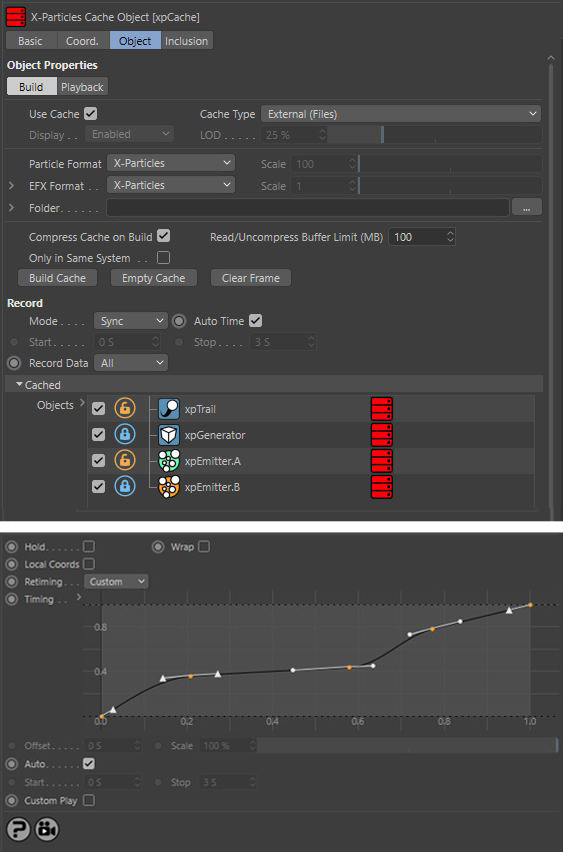
Our time and custom spline retiming option give you fine control over playback. The new cache layers in xpCache enables you to lock and unlock to re-cache objects in your scene.

X-Particles is built seamlessly into Cinema 4D like it is part of the application. It’s compatible with the existing particle modifiers, object deformers, Mograph effectors, Hair module, native Thinking Particles, and works with the dynamics system in R14 and later.
If you know how to use the Mograph module, you already know how to use X-Particles, it's that easy.
X-Particles has the most advanced particle rendering solution on the market. It enables you to render particles, splines, smoke and fire, all within the Cinema 4D renderer. Included are a range of shaders for sprites, particle wet maps and skinning colors. You can even use sound to texture your objects.
Perfectly partnered with INSYDIUM’s Cycles 4D and also compatible with the following: