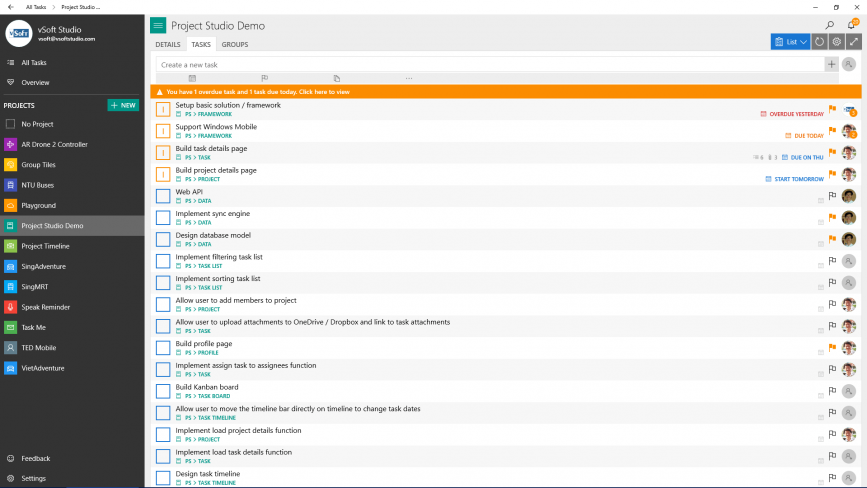

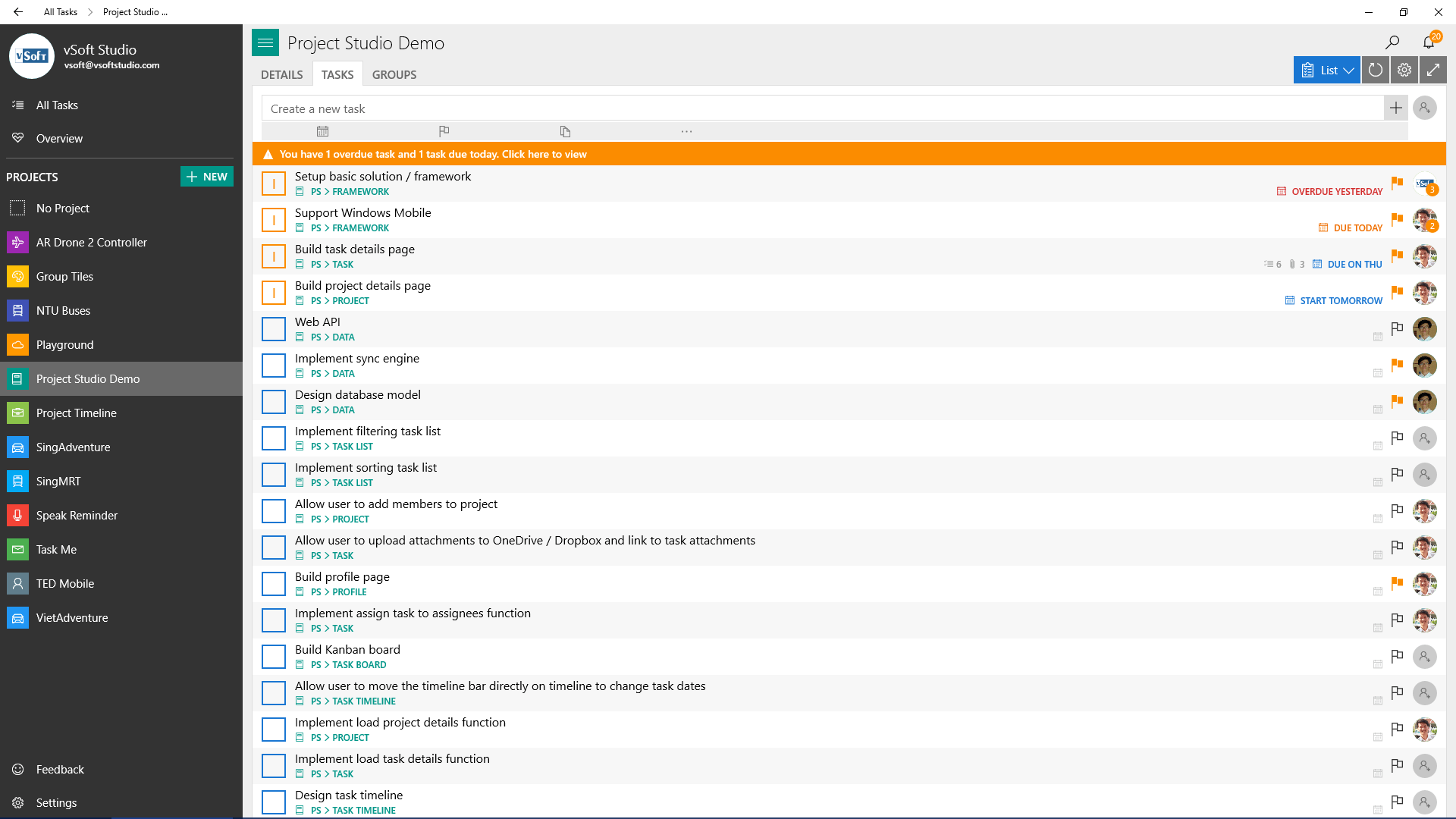
At the moment, Project Studio is available across Windows 10 devices, including PCs, tablets and phones. Web, Android and iOS apps will come in the near future.

Please wait...
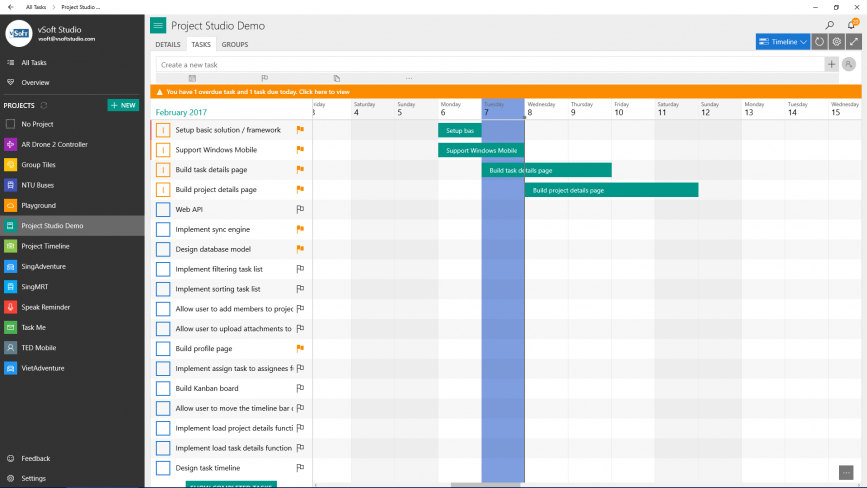
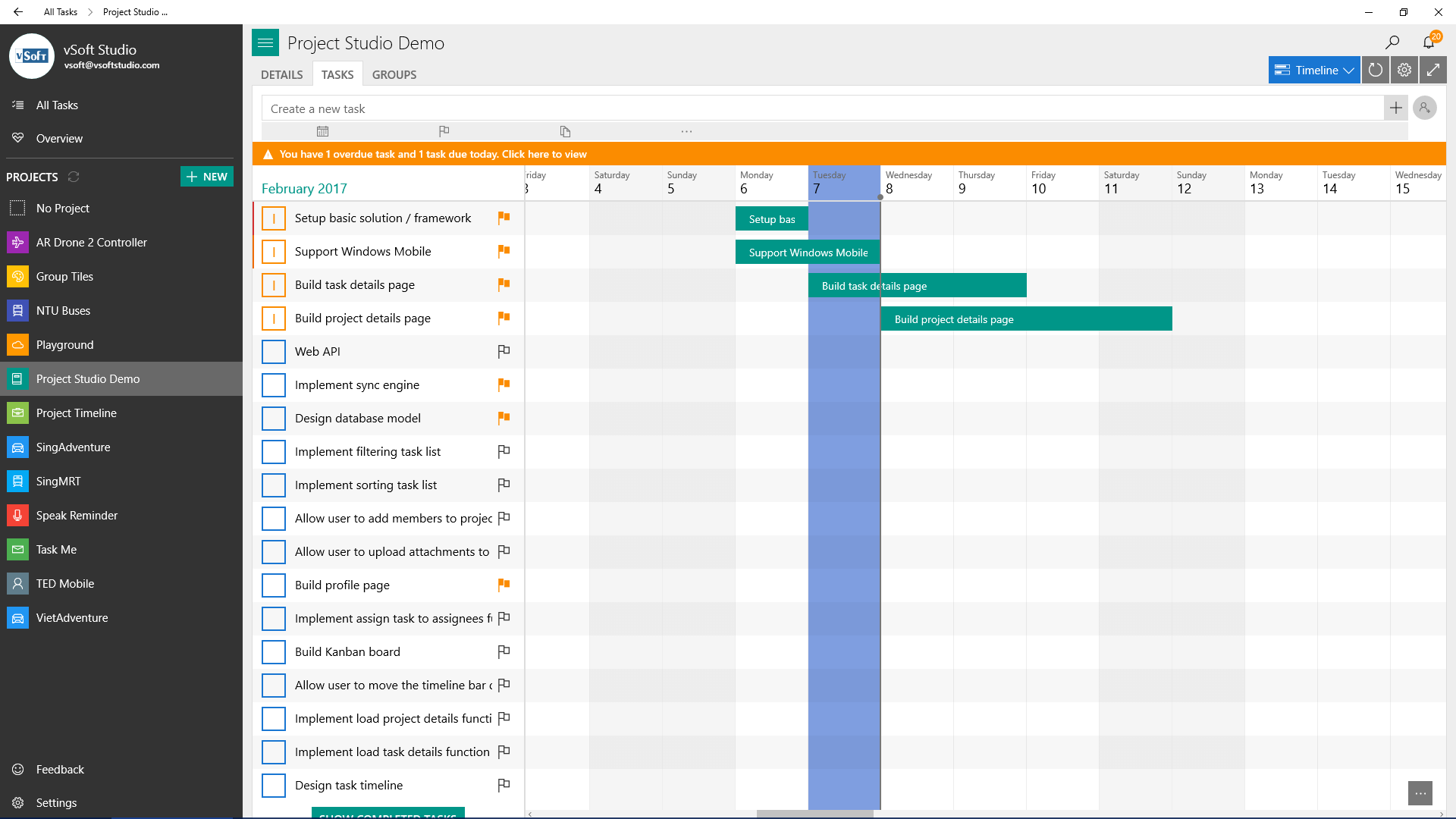
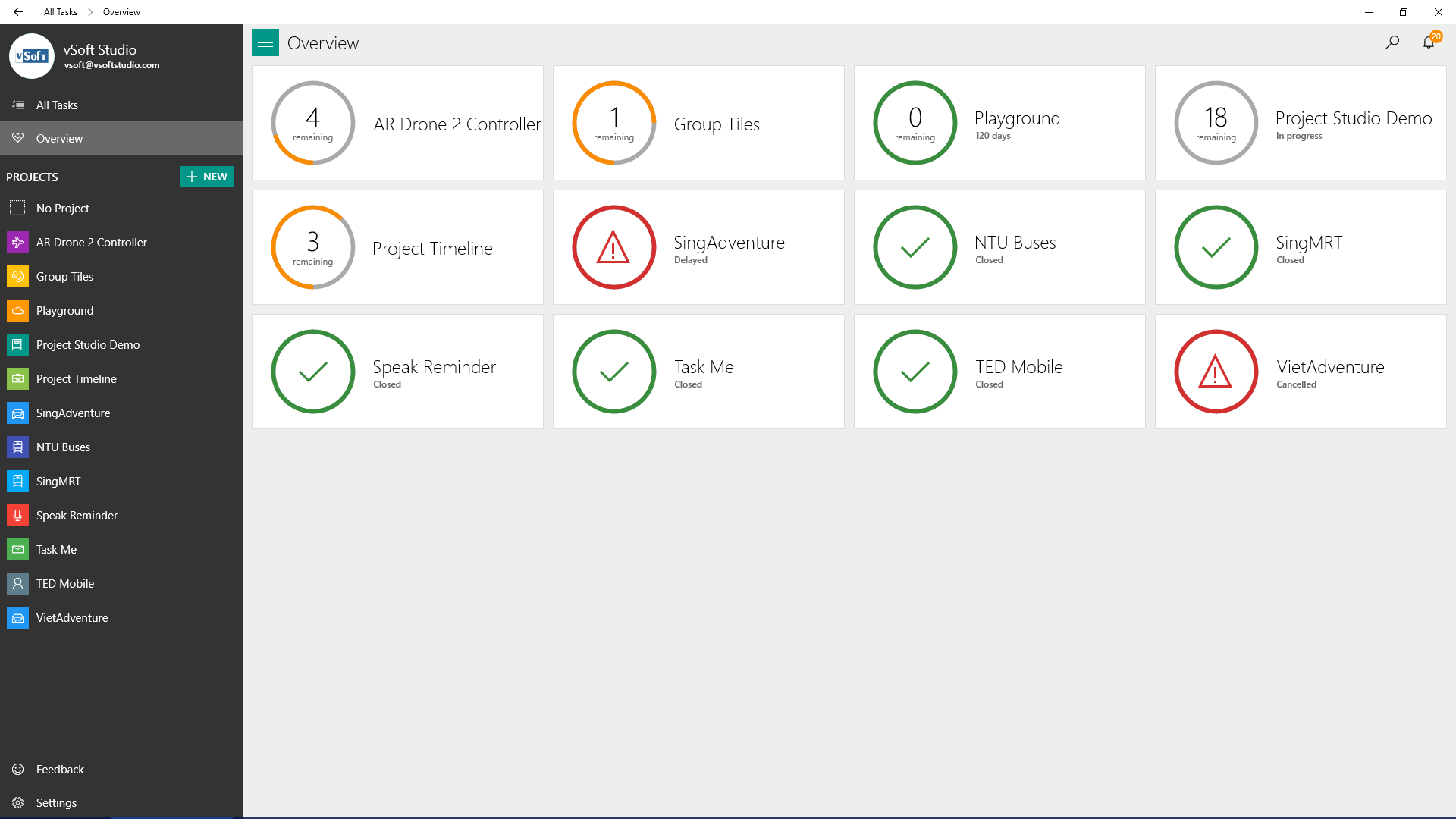
Easily switching among simple lists, timeline and Kanban board (coming soon) allows you to conveniently keep track of your projects anywhere anytime.
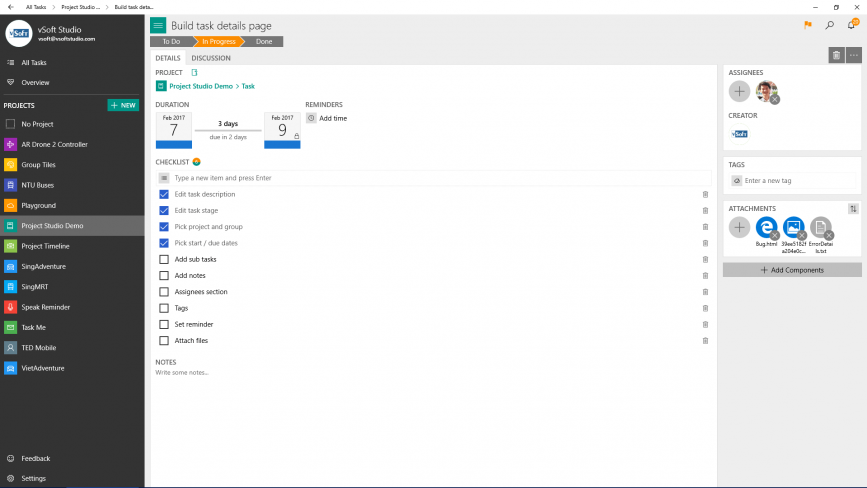
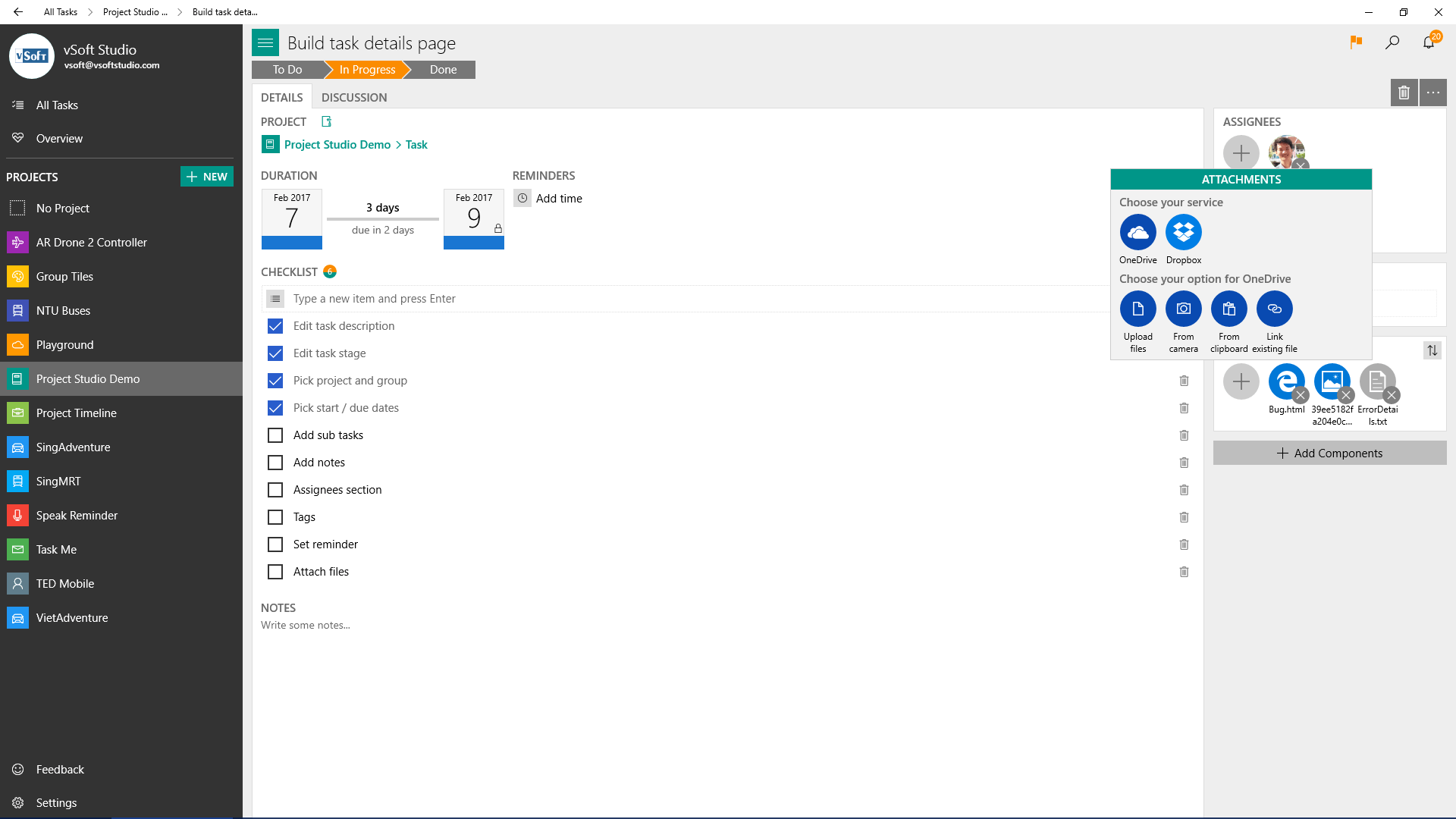
Attach any files from your OneDrive or Dropbox to any tasks, and share them with the team.
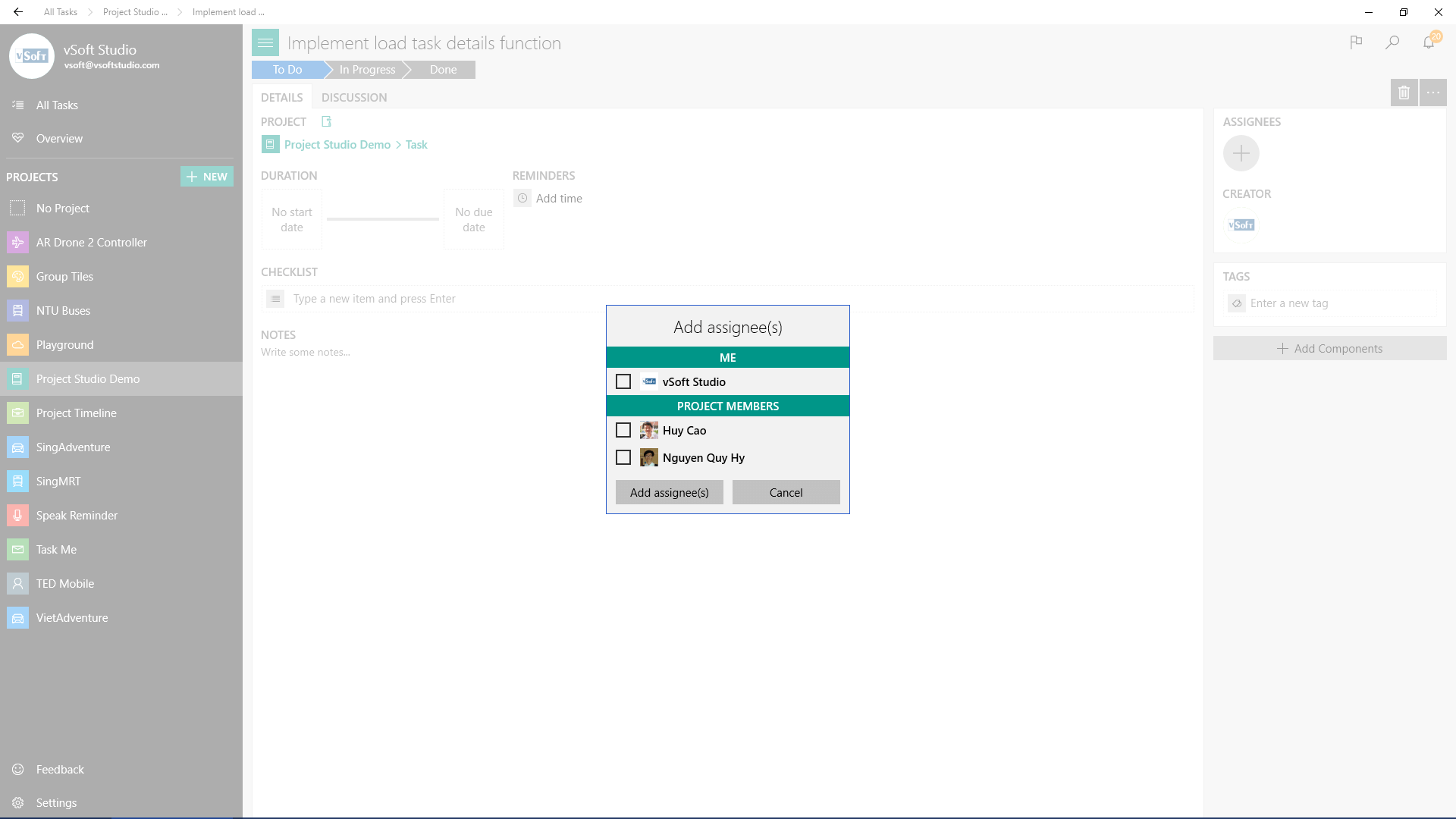
Form your team, invite your friends or colleagues to the projects and work together. You can also control who can view or edit the tasks.
Get notified instantly when you are invited to a project, have a task assigned, or your colleague has completed a task, and more activities.
Feel both comfortable and familiar while managing tasks across your 27-inch PC, 10-inch tablet or 4-inch phone.

At the moment, Project Studio is available across Windows 10 devices, including PCs, tablets and phones. Web, Android and iOS apps will come in the near future.
For Windows app, you can simply open Store on your Windows 10 devices, search for Project Studio and press Install. Or you can download here
Project Studio is free for use with many advanced functions including Cloud Sync and collaboration.
However, to unlock even more exciting functions, you can purchase Project Studio Premium package. See more details in the pricing section below.




Japan possesses a massive, wealthy domestic population. Because Japanese consumers buy physical media (CDs and Blu-rays) and attend live events at high rates, many Japanese entertainment companies historically ignored the global market. They tailored their products strictly to domestic tastes, creating an isolated, highly unique ecosystem—much like the isolated evolution of species on the Galápagos Islands.
: Japan's most recognizable cultural export. Manga (comics) serves as the primary source material for Anime (animation). The industry is driven by "Media Mix" strategies, where a single story is simultaneously released as a manga, anime, video game, and toy line.
Anime (animation) and manga (comic books) are the most visible ambassadors of Japanese culture worldwide. Unlike Western comics, which historically targeted younger audiences or specific genres, manga spans every demographic and topic imaginable—from sports (Spokon) and cooking to corporate politics and high fantasy. tokyo hot n0888 akari minamino jav uncensored hot
The Japanese entertainment industry is a global powerhouse that blends centuries-old traditions with cutting-edge technology. It is characterized by a unique "media mix" strategy, where stories are simultaneously developed across manga, anime, games, and music to create immersive cultural phenomena. 🎨 Manga and Anime
Despite BTS's domination of the globe, J-Pop has largely failed to cross over since Kyu Sakamoto's Sukiyaki in 1963. Why? The Karaoke factor . J-Pop is written for the average Japanese office worker to sing after drinking. The ranges are narrow, the lyrics are literal, and the melodies are "chest" (easy to belt). Furthermore, Japan has a Galapagos Syndrome market: they don't need exports because the domestic market (2nd largest in music) is profitable enough. Why sing in broken English for a Grammy when you can make $5 million selling physical CDs with handshake tickets in Tokyo? Japan possesses a massive, wealthy domestic population
To a Westerner, Japanese variety shows look like a fever dream. You will see a top actor trying to eat a creampuff while a chimpanzee rides a unicycle behind them. You will see comedians strapped to a "Wall of Pain" for failing a trivia question.
: The second-largest music market in the world. It is characterized by highly produced "idol" groups (e.g., AKB48) and a strong emphasis on physical media sales (CDs) and live performances. : Japan's most recognizable cultural export
Manga is the bedrock of Japanese pop culture, serving as the source material for most major entertainment franchises.
Yes, the video in question is described as uncensored, which means it contains explicit content.
Tradition Meets Technology: Navigating Japan’s Multi-Faceted Cultural Industry. Core Themes to Explore 1. Historical Foundations (Traditional Arts)