Stefan F. Dieffenbacher, M.B.A.
Founder and CEO of Digital Leadership
Today, entertainment is not merely what we consume; it is who we are. It fuels our social interactions, shapes our political opinions, defines our fashion, and even dictates the rhythm of our daily lives. From the algorithm-driven chaos of TikTok to the sprawling cinematic universes of Marvel and the immersive worlds of AAA video games, the lines between creator, consumer, and content have blurred into irrelevance.
The failure of VR was the isolation. Spatial computing promises to integrate digital objects into the physical world. Imagine watching a football game where the stats hover over the players on your coffee table, or a horror movie where the walls of your living room dissolve into the environment. When AR glasses become as cheap as sunglasses, "entertainment content" will no longer be confined to a rectangle; it will be layered onto reality itself.
Today, content ecosystems rely on hyper-personalized algorithms. Platforms analyze user interactions, watch-time data, and subtle behavioral patterns. They deliver customized content feeds to individual screens, shifting the industry from mass broadcast to hyper-targeted distribution. 3. Key Pillars of Modern Popular Media tonightsgirlfriend150710miamalkovaxxx720 free
To help refine this content or develop secondary pieces, let me know if you want to focus on a , explore monetization strategies , or analyze a particular case study from recent media history. Share public link
Entertainment content has evolved significantly over the years, from traditional forms such as theater, music, and film to modern digital formats like streaming services, social media, and online gaming. The rise of digital technology has made it possible for content creators to produce, distribute, and consume entertainment content more easily and affordably. Today, entertainment is not merely what we consume;
POV: It’s Friday night in 2005. You just left Blockbuster with a bag of popcorn and a DVD that you definitely have to return by Sunday. 📼✨
This shift has forced mainstream media companies to adapt. Hollywood studios frequently scout talent from internet platforms, and traditional marketing budgets have pivoted heavily toward influencer partnerships, blurring the lines between consumer, creator, and advertiser. Technological Drivers: Streaming, AI, and Immersive Media The failure of VR was the isolation
Algorithmic curation often reinforces pre-existing biases. By continuously serving content that aligns with a user's current views, platforms can inadvertently create ideological echo chambers, accelerating societal polarization.
The undisputed king of this is the Marvel Cinematic Universe (MCU). You cannot fully understand Doctor Strange in the Multiverse of Madness without having watched WandaVision on Disney+. You cannot appreciate the depth of a Star Wars cameo without watching The Mandalorian . The story is not in one movie or one show; it is in the system .
Entertainment content and popular media are the mirrors and molders of modern society. From the morning scroll on social media to the late-night streaming binge, media consumes a vast portion of human attention. This article explores the evolution of this content, its psychological impacts, and where the industry is heading next. 1. The Great Evolution: From Broadcast to Algorithmic Feeds
The industry remains anchored by several core sectors that drive both revenue and cultural influence:
Let’s find the best solution for your business to grow and scale sustainably!
We will uncover your current business situation and goals and provide you with a bespoke solution that helps you drastically grow your business working with us.


Founder and CEO of Digital Leadership


Read the reviews and make sure that this is not a waste of time, but a super effective tool.

Let’s find the best solution for your business to grow and scale sustainably!


Let’s find the best solution for your business to grow and scale sustainably!
We will uncover your current business situation and goals and provide you with a bespoke solution that helps you drastically grow your business working with us.

Founder and CEO of Digital Leadership
Read the reviews and make sure that this is not a waste of time, but a super effective tool.
Let’s find the best solution for your business to grow and scale sustainably!

On this call, we will uncover your current business situation and goals and talk about how to drive change and solve your need.

Welcome to our scheduling page.
Choose the meeting type that applies to your needs and schedule a time to meet with someone from our team.
We look forward to speaking with you soon!
Let’s find the best solution for your business to grow and scale sustainably!

On this call, we will uncover your current business situation and goals and talk about how to drive change and solve your need.
Welcome to our scheduling page.
Choose the meeting type that applies to your needs and schedule a time to meet with someone from our team.
We look forward to speaking with you soon!
Let’s find the best solution for your business to grow and scale sustainably!

On this call, we will uncover your current business situation and goals and talk about how to drive change and solve your need.
Welcome to our scheduling page.
Choose the meeting type that applies to your needs and schedule a time to meet with someone from our team.
We look forward to speaking with you soon!

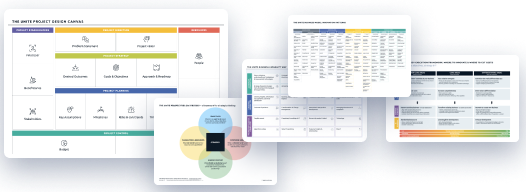
In a uniquely designed 60 or 90 minute session*, we will …
Based on the Blueprinting session, you will receive a tailored blueprint that aligns with your objectives, vision and goals, ensuring that your initiative is a success from start to finish.

In this session, you will be working together with Patrick Zimmermann, Associate Partner for Customer Experience


In a uniquely designed 60 or 90 minute session*, we will …
Based on the Blueprinting session, you will receive a tailored blueprint that aligns with your objectives, vision and goals, ensuring that your initiative is a success from start to finish.

In this session, you will be working together with Dr. Andreas Rein, Partner at Digital Leadership for Culture & Org Change


In a uniquely designed 60 or 90 minute session*, we will …
Based on the Blueprinting session, you will receive a tailored blueprint that aligns with your objectives, vision and goals, ensuring that your initiative is a success from start to finish.

In this session, you will be working together with Sascha Martini, Partner at Digital Leadership for Innovation and Digital Transformation
In a uniquely designed 60 or 90 minute session*, we will …
Based on the Blueprinting session, you will receive a tailored blueprint that aligns with your objectives, vision and goals, ensuring that your initiative is a success from start to finish.

In this session, you will be working together with Stefan F. Dieffenbacher, Founder of Digital Leadership
Stefan is a global thought leader in the innovation space
In a uniquely designed 60 or 90 minute session*, we will …
Based on the Blueprinting session, you will receive a tailored blueprint that aligns with your objectives, vision and goals, ensuring that your initiative is a success from start to finish.

In this session, you will be working together with Adam D. Wisniewski, Partner for IT Strategy & Business Alignment
Let’s find the best solution for your business to grow and scale sustainably!

On this call, we will uncover your current business situation and goals and talk about how to drive change and solve your need.
Welcome to our scheduling page.
Choose the meeting type that applies to your needs and schedule a time to meet with someone from our team.
We look forward to speaking with you soon!
Let’s find the best solution for your business to grow and scale sustainably!

On this call, we will uncover your current business situation and goals and talk about how to drive change and solve your need.
Welcome to our scheduling page.
Choose the meeting type that applies to your needs and schedule a time to meet with someone from our team.
We look forward to speaking with you soon!
Let’s find the best solution for your business to grow and scale sustainably!

On this call, we will uncover your current business situation and goals and talk about how to drive change and solve your need.
Welcome to our scheduling page.
Choose the meeting type that applies to your needs and schedule a time to meet with someone from our team.
We look forward to speaking with you soon!
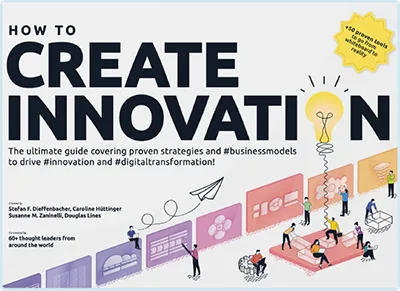 Book How to Create Innovation